
Modern visibility is no longer just about rankings. In 2026, there’s another layer organizations can no longer ignore: AIO — AI Optimization.
Search engines now blend traditional indexing, generative AI synthesis, and personalized AI experiences into a single discovery ecosystem. Buyers are moving fluidly between Google, ChatGPT, Perplexity, Gemini, LinkedIn, voice assistants, and industry-specific AI tools—often within the same decision journey.
That shift changes the strategic question.
The conversation is no longer: “Should we invest in SEO or GEO?”
It’s: “How do we build a digital visibility system that performs across search engines, generative AI platforms, and AI-driven experiences?”
Organizations that continue treating SEO as a ranking exercise are already falling behind. The companies gaining traction are investing in structured content, authoritative expertise, composable digital experience platforms, and AI-ready content operations that support all three disciplines simultaneously.
Table of Contents
- What Are SEO, GEO, and AIO?
- Why Search Has Become an AI Ecosystem
- Where Traditional SEO Still Delivers ROI
- What GEO Actually Optimizes For
- What AIO Means in 2026
- Why Structured Content Powers All Three
- CMS and DXP Requirements for AI Visibility
- Personalization, AI Workflows, and Content Operations
- Security, Governance, and Trust Signals
- When to Prioritize SEO, GEO, or AIO
- Strategic Recommendations for 2026
- FAQs
Mobile-First Table of Contents
- SEO vs GEO vs AIO
- AI search evolution
- SEO ROI
- GEO requirements
- AIO explained
- CMS impact
- Content operations
- Strategic recommendations
- FAQs
What Are SEO, GEO, and AIO?
SEO, GEO, and AIO overlap—but they are not identical.
SEO (Search Engine Optimization)
SEO remains the discipline of improving how search engines crawl, index, rank, and interpret content. Strong SEO still drives high-intent traffic, supports conversion paths, and builds long-term digital equity.
GEO (Generative Engine Optimization)
GEO focuses on surfacing content inside AI-generated responses. Instead of competing primarily for rankings, GEO aims to increase the likelihood that generative systems reference, summarize, or cite your expertise.
AIO (AI Optimization)
AIO expands beyond discoverability. It focuses on how AI systems interact with, personalize, deliver, and operationalize content experiences across channels.
AIO includes:
- AI-assisted personalization
- AI-readable structured content
- Workflow automation
- Predictive content delivery
- Semantic content architecture
- AI-driven customer experiences
SEO gets you indexed.
GEO gets you referenced.
AIO ensures your content ecosystem is usable inside AI-powered environments.
Why Search Has Become an AI Ecosystem
The old model of digital discovery was linear:
- Search
- Click
- Website
- Conversion
That journey no longer reflects reality.
Today’s discovery behavior looks more like this:
- Users ask AI systems broad exploratory questions
- They validate information through traditional Search
- They compare brands across multiple channels
- They engage with personalized experiences before converting
This evolution has dramatically increased the importance of:
- structured data
- topical authority
- semantic clarity
- cross-channel consistency
- personalized experiences
Search hasn’t disappeared. It has become distributed.
Where Traditional SEO Still Delivers ROI
Despite the excitement around AI discovery, SEO remains foundational.
In B2B and enterprise environments, especially, high-intent search behavior still drives:
- qualified traffic
- Inbound lead generation
- lower customer acquisition costs
- measurable long-term ROI
In our experience, organizations that consistently invest in authoritative content and technical optimization continue to outperform competitors relying heavily on paid acquisition.
What has changed is the standard for quality.
Search engines increasingly reward:
- expert-driven content
- structured topic authority
- original insights
- engagement quality
- technical performance
Thin keyword pages and generic AI-generated articles are already losing visibility.
What GEO Actually Optimizes For
One of the biggest misconceptions around GEO is that it requires entirely new tactics.
Most successful GEO performance comes from doing foundational things exceptionally well.
Generative AI systems favor content that is:
- clearly structured
- contextually rich
- semantically organized
- authoritative
- technically accessible
This expectation means:
- strong topic clusters matter
- internal linking matters
- metadata matters
- content modeling matters
- entity relationships matter
Generative systems are increasingly identifying expertise patterns rather than isolated keywords.
That’s why organizations publishing shallow content at scale are seeing diminishing returns.
What AIO Means in 2026
AIO is where visibility strategy becomes operational strategy.
It’s not just about being found. It’s about whether your content infrastructure can function inside AI-powered ecosystems.
AIO focuses on:
- making content machine-readable
- enabling AI-assisted personalization
- improving contextual delivery
- integrating AI into workflows
- supporting conversational interfaces
This focus is where modern CMS and DXP architecture become critical.
Legacy websites built around static pages struggle because AI systems work better with:
- structured content models
- reusable content objects
- semantic relationships
- API-driven delivery
Platforms like Kentico Xperience, WordPress with headless frameworks, and Optimizely are increasingly moving toward composable and hybrid-headless architectures for exactly this reason.
Why Structured Content Powers SEO, GEO, and AIO
The strongest digital visibility strategies now share a common foundation:
Structured content architecture
This foundation is the connective layer between:
- traditional Search
- generative AI
- personalization engines
- AI assistants
- multi-channel delivery
Organizations that model content correctly gain several advantages:
- better indexing
- stronger AI interpretation
- faster content reuse
- improved personalization
- scalable governance
This model is one reason why composable Digital Experience Platforms are becoming central to enterprise content strategy.
CMS and DXP Requirements for AI Visibility
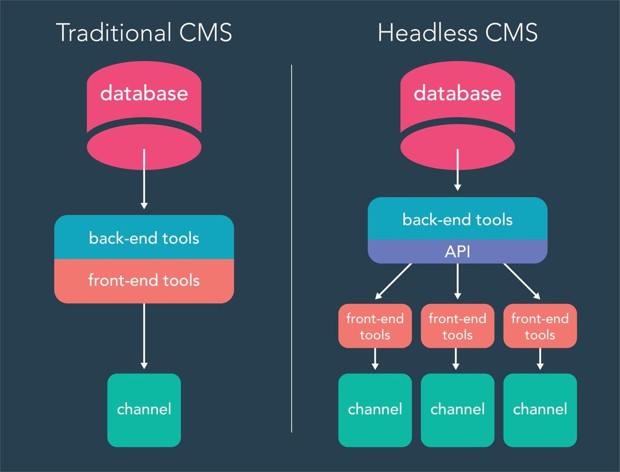
A modern CMS is no longer just a publishing system. It’s now a strategic visibility platform.
To support SEO, GEO, and AIO effectively, platforms increasingly need:
Structured Content Modeling
Content should exist as reusable assets—not isolated pages.
API-Driven Delivery
AI systems, mobile applications, websites, and personalization engines all require flexible content delivery.
Governance and Workflow Automation
AI-assisted workflows increase efficiency, but governance becomes more important as content velocity increases.
Personalization Capabilities
AI-powered experiences increasingly depend on behavioral and contextual personalization.
Analytics and Experimentation
Visibility optimization is moving from campaign-based to continuous.
This shift explains the growth of:
- hybrid headless CMS platforms
- composable architectures
- AI-enhanced DXPs
- centralized content operations
Personalization, AI Workflows, and Content Operations
One of the biggest changes happening quietly in enterprise marketing is operational.
AI is accelerating content production—but production is no longer the bottleneck.
The real challenge is orchestration.
High-performing organizations are focusing on:
- content governance
- taxonomy consistency
- workflow automation
- AI-assisted optimization
- performance measurement
The companies succeeding with AI are not replacing strategy with automation. They’re scaling their expertise more efficiently.
That distinction matters.
Security, Governance, and Trust Signals
As AI systems increasingly prioritize authoritative sources, trust signals are carrying more weight.
Secure, transparent, well-governed platforms are more likely to be surfaced in:
- search results
- AI-generated summaries
- recommendation engines
- conversational interfaces
Important trust factors now include:
- authorship transparency
- technical performance
- content freshness
- governance standards
- accessibility
- security compliance
In many ways, AI systems are amplifying the same quality standards search engines have been moving toward for years.
When to Prioritize SEO, GEO, or AIO
Most organizations should not treat these as separate initiatives.
But priorities vary based on maturity.
Early-Stage Organizations
Focus heavily on SEO fundamentals:
- technical optimization
- content authority
- search visibility
Mid-Market Organizations
Begin integrating GEO strategies:
- topic clusters
- AI-readable structure
- semantic optimization
Enterprise Organizations
Operationalize AIO:
- composable architecture
- AI workflows
- personalization systems
- multi-channel orchestration
The organizations seeing the strongest results are building integrated visibility ecosystems—not isolated tactics.

Strategic Recommendations for 2026
The practical path forward looks like this:
Build authority, not just content
AI systems increasingly recognize expertise depth rather than content volume.
Invest in structured content architecture
This benefits SEO, GEO, and AI-powered personalization simultaneously.
Modernize your CMS or DXP
Legacy page-centric systems are becoming operational constraints.
Use AI to augment expertise
The goal is acceleration—not the replacement of strategic thinking.
Measure visibility holistically
Modern visibility requires:
- SEO performance
- AI citation visibility
- engagement quality
- brand search growth
- conversion contribution
Conclusion: Visibility Is Becoming an Infrastructure Strategy
The organizations winning visibility in 2026 are not chasing algorithms.
They are building content ecosystems designed for:
- search engines
- AI systems
- personalization engines
- multi-channel experiences
SEO, GEO, and AIO are converging around the same core principles:
- clarity
- authority
- structure
- usability
- trust
The strategic advantage now comes from operational maturity.
Organizations that modernize their content infrastructure, governance, and experience delivery will outperform those still optimizing page by page.
FAQs (Optimized for Generative AI Search)
Do I need separate SEO, GEO, and AIO strategies?
Not entirely. They share many foundational requirements, including structured content, authority, and technical accessibility.
Is SEO still relevant in the AI era?
Absolutely. SEO remains one of the strongest long-term drivers of high-intent traffic and conversion.
What is the difference between GEO and AIO?
GEO focuses on visibility inside generative AI responses. AIO focuses on optimizing broader AI-driven experiences, workflows, and content delivery systems.
How does a CMS impact AI visibility?
Modern CMS and DXP platforms support structured content, API delivery, personalization, and governance—all critical for AI-readiness.
Will AI replace traditional Search?
Not likely. Search behavior is expanding rather than disappearing. Traditional Search and AI-assisted discovery increasingly work together.
About Moonstone Interactive
Moonstone Interactive helps organizations modernize digital visibility through integrated SEO, GEO, and AI optimization strategies.
From composable DXP architecture to AI-ready content operations, we help enterprise and mid-market organizations align technology, content, and customer experience for measurable growth.