Table of Contents
- What Is a Digital Experience Platform?
- The Evolution of DXPs: From CMS-Centric to Composable
- Core Capabilities of a Modern Digital Experience Platform
- Security, Compliance, and Governance at the Platform Level
- Cloud Scalability and Performance Expectations
- Choosing the Right DXP: Strategic Considerations
- The Strategic Value of DXPs in 2025
- Partnering with Moonstone Interactive
Digital experience has become a defining factor in how organizations compete, grow, and retain trust. In 2025, customers no longer evaluate brands based on a single website or app - they judge the totality of their experience across devices, channels, regions, and moments. That experience must be fast, relevant, secure, accessible, and consistent, regardless of where or how engagement happens.
This reality has fundamentally changed how digital platforms are architected. Traditional content management systems, once sufficient for publishing web pages, are no longer enough on their own. Organizations now require platforms that unify content, data, personalization, workflow, and delivery across an increasingly complex ecosystem. This is where Digital Experience Platforms (DXPs) come into play.
This article explores what a modern DXP truly is, how it has evolved, and why it has become a strategic foundation for enterprise digital experience. We’ll also examine architectural trends such as headless and composable DXPs, the role of AI and automation, SEO-ready content management, and what to consider when selecting the right platform.
What Is a Digital Experience Platform?
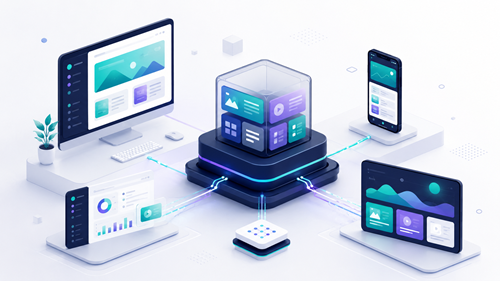
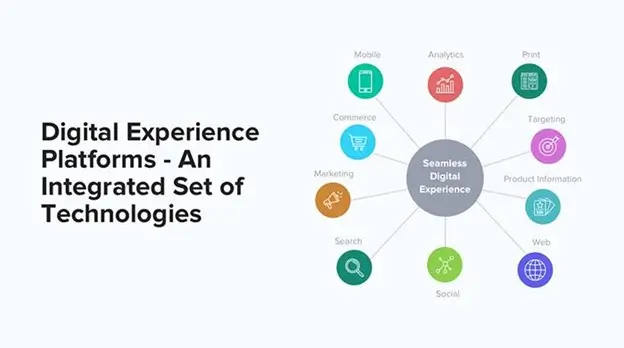
A Digital Experience Platform (DXP) is an integrated technology framework that manages, orchestrates, and optimizes digital interactions across multiple channels and touchpoints. At its core, a DXP brings together content management, data, personalization, and delivery to enable consistent, high-quality digital experiences at scale.
Unlike earlier "all-in-one" platforms, modern DXPs are increasingly modular. They can function as monolithic suites, hybrid systems, or fully composable ecosystems, depending on organizational needs. What defines a DXP is not a single feature, but its ability to connect content, context, and customer insight into a unified experience layer.

The Evolution of DXPs: From CMS-Centric to Composable
From Website Management to Experience Orchestration
Early DXPs emerged as extensions of enterprise CMS platforms, adding personalization, analytics, and marketing automation. Over time, digital channels multiplied—mobile apps, kiosks, IoT devices, customer portals, and third-party platforms—forcing DXPs to move beyond the browser.
Today’s DXPs are no longer website platforms. They are experience orchestration layers that deliver content and functionality wherever users are, in real time, and often without a traditional "page" at all.
Headless and Hybrid CMS Architectures
A major driver of this evolution is the shift toward headless and hybrid CMS models. In a headless architecture, content is managed centrally but delivered via APIs to any front-end or channel. Hybrid approaches blend headless flexibility with traditional page-based editing, allowing marketing teams to move quickly without sacrificing architectural freedom.
Platforms such as Kentico, WordPress, and Optimizely (formerly Episerver) all support variations of these models, reflecting the mainstream adoption of headless and hybrid delivery has become.
Core Capabilities of a Modern Digital Experience Platform
Content Management Built for Scale and SEO
At the foundation of every DXP is content management—but not in the traditional sense. Modern DXPs treat content as structured, reusable data, rather than just pages. This enables:
-
Faster publishing across channels
-
Stronger SEO through structured metadata and schema support
-
Consistent messaging across regions and brands
SEO readiness is now a baseline requirement. A DXP must support technical SEO best practices, including clean URLs, performance optimization, metadata control, accessibility compliance, and integration with analytics and search tooling.
Personalization and Experience Optimization
Personalization has shifted from simple rules-based targeting to contextual, data-driven experience optimization. Modern DXPs enable personalization based on behavior, intent, lifecycle stage, and sometimes predictive signals powered by machine learning.
Importantly, personalization today is not about intrusive targeting—it’s about relevance. DXPs enable teams to test, learn, and continuously optimize experiences without fragmenting content governance or introducing operational risk.
AI-Assisted Content and Workflow Automation
AI has become a practical, embedded capability within DXPs rather than a standalone innovation. In 2025, AI is most valuable when applied to:
-
Content creation and optimization assistance
-
Automated tagging and metadata enrichment
-
Workflow routing, approvals, and quality checks
-
Insight generation from behavioral data
The goal is not to replace human expertise, but to reduce friction, accelerate publishing cycles, and improve consistency across large content ecosystems.
Multi-Channel Content Delivery
Digital experiences no longer live solely on owned web properties. DXPs are designed to deliver content to mobile apps, commerce platforms, customer portals, email systems, digital signage, and third-party integrations.
This multi-channel delivery model ensures content teams can manage once and publish everywhere, while development teams retain control over presentation and performance.

Security, Compliance, and Governance at the Platform Level
As digital platforms become more central to business operations, security and governance have moved from IT concerns to board-level priorities. Modern DXPs are expected to support:
-
Role-based access control and editorial permissions
-
Audit trails and content versioning
-
Compliance with GDPR, WCAG, and industry regulations
-
Secure cloud infrastructure and patch management
Strong governance ensures that distributed teams can collaborate efficiently without compromising brand integrity, compliance, or data protection.
Cloud Scalability and Performance Expectations
Performance is inseparable from experience. Search visibility, conversion rates, and user trust all depend on fast, reliable delivery. Cloud-native DXPs leverage global CDNs, elastic infrastructure, and modern caching strategies to ensure content loads quickly anywhere in the world.
Scalability is no longer just about traffic spikes—it’s about supporting organizational growth, additional brands, new markets, and evolving digital products without re-platforming every few years.

Choosing the Right DXP: Strategic Considerations
Selecting a DXP is a long-term architectural decision, not a feature comparison exercise. The most successful implementations start by aligning platform capabilities with business strategy.
Organizations should evaluate how a DXP supports their content model, delivery channels, integration ecosystem, and governance needs. Flexibility, extensibility, and operational efficiency often matter more than bundled features.
Equally important is partner expertise. Implementing a DXP effectively requires deep understanding of both the platform and the broader digital ecosystem it supports.
The Strategic Value of DXPs in 2025
A well-implemented Digital Experience Platform is not just a marketing tool—it is a strategic asset. It enables organizations to adapt quickly, personalize responsibly, scale confidently, and deliver consistent value across every digital interaction.
As digital ecosystems grow more complex, DXPs provide the connective tissue between content, technology, and customer experience. Organizations that invest thoughtfully in this foundation are better positioned to evolve without disruption.
Partnering with Moonstone Interactive
Designing and implementing a modern DXP requires more than selecting the right technology—it requires strategic planning, architectural clarity, and deep platform expertise.
Moonstone Interactive helps organizations design, implement, and optimize digital experience platforms that are scalable, secure, and future-ready. With extensive experience across enterprise CMS and DXP ecosystems, Moonstone works as a strategic partner—not just an implementer.
👉 Learn how Moonstone Interactive can support your digital experience strategy: https://www.msinteractive.com/contact